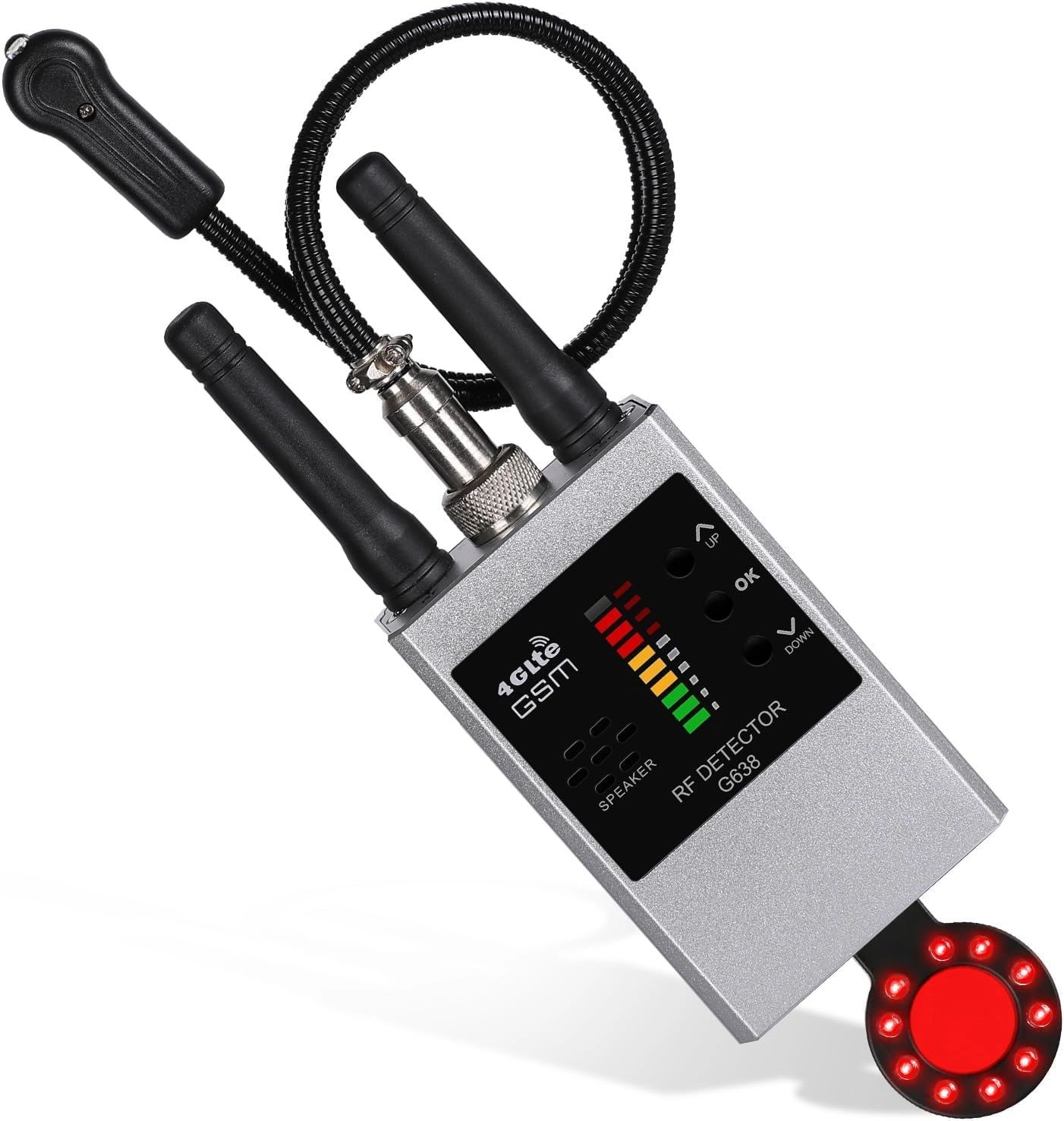
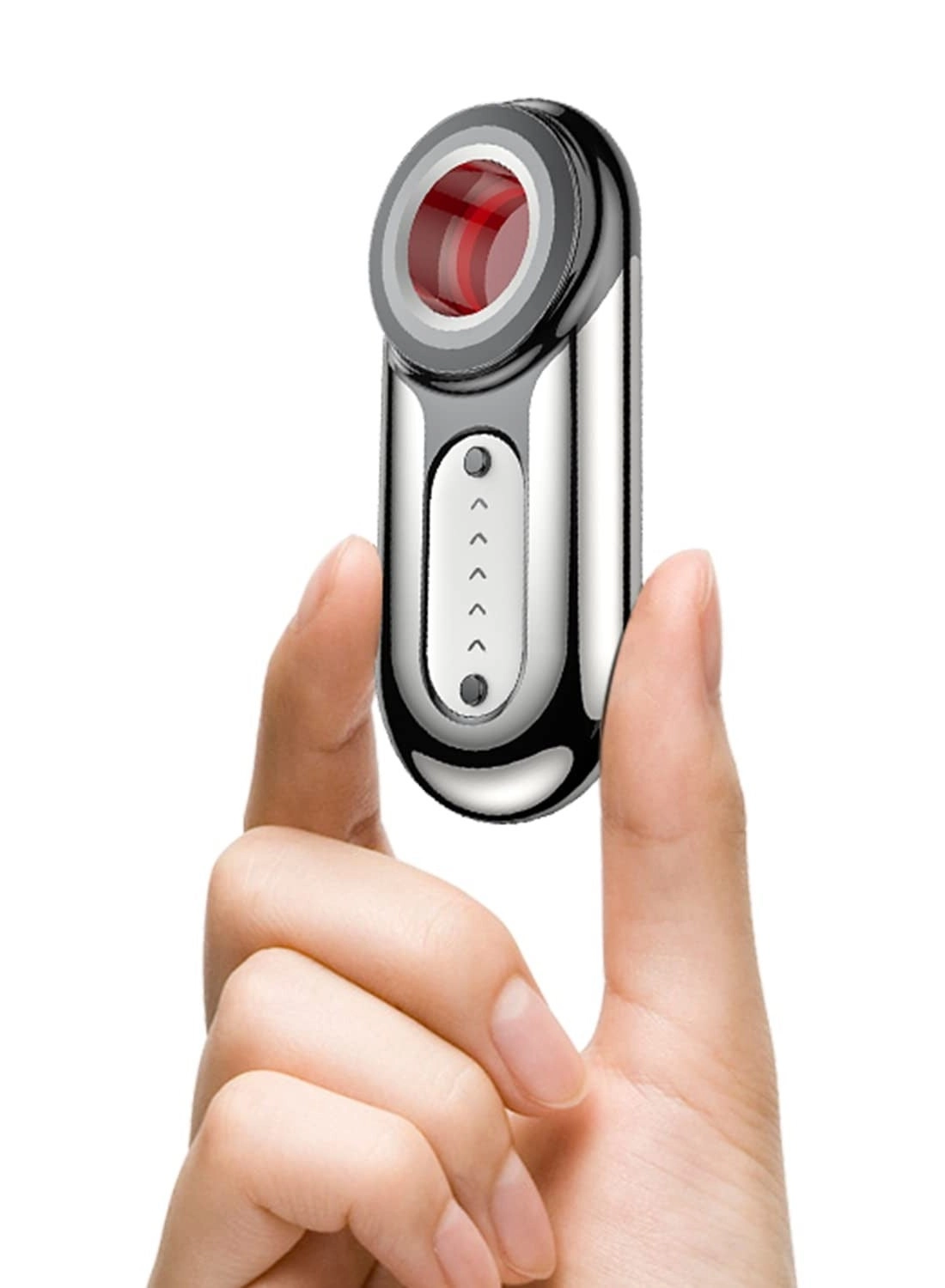
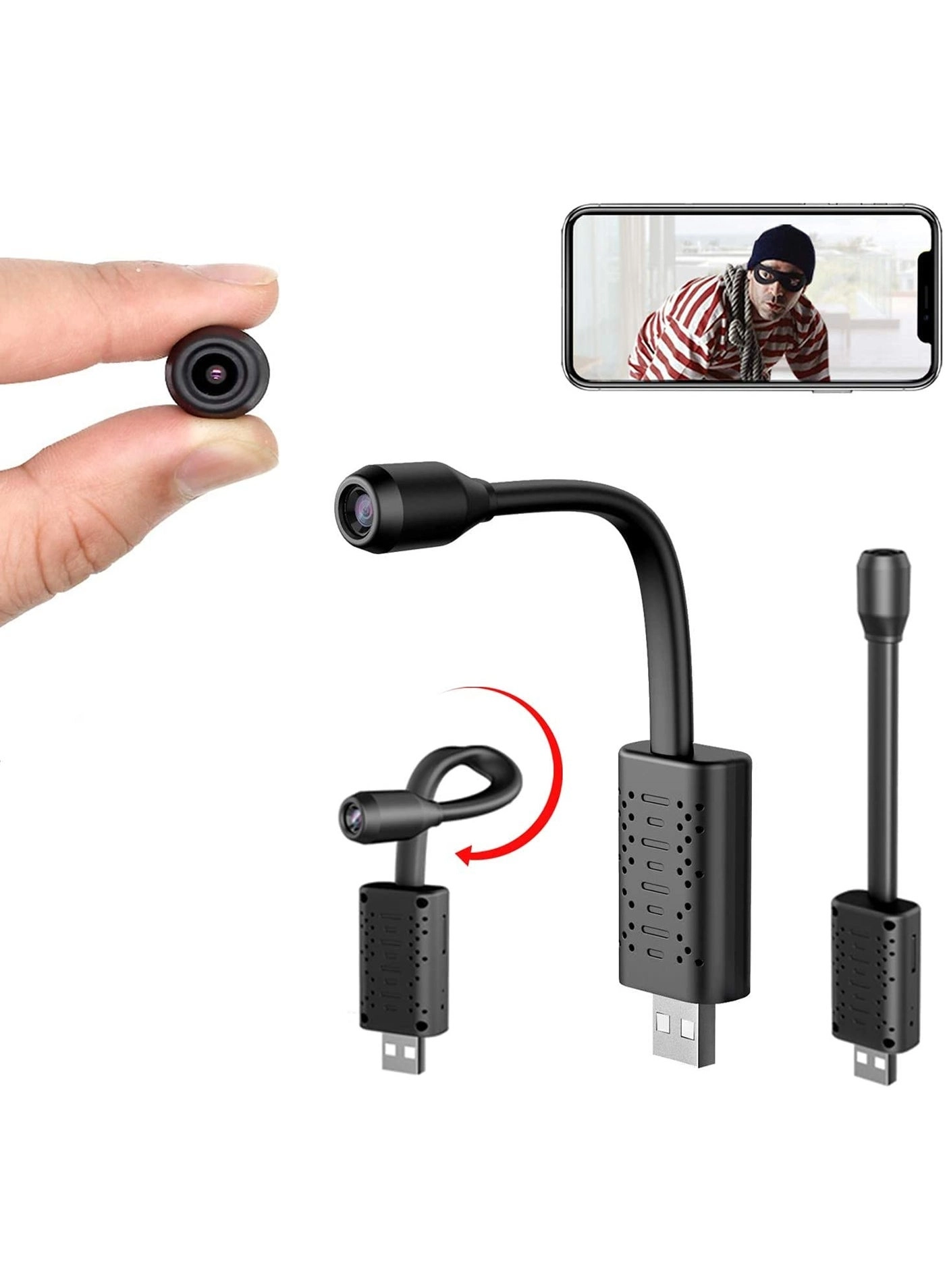
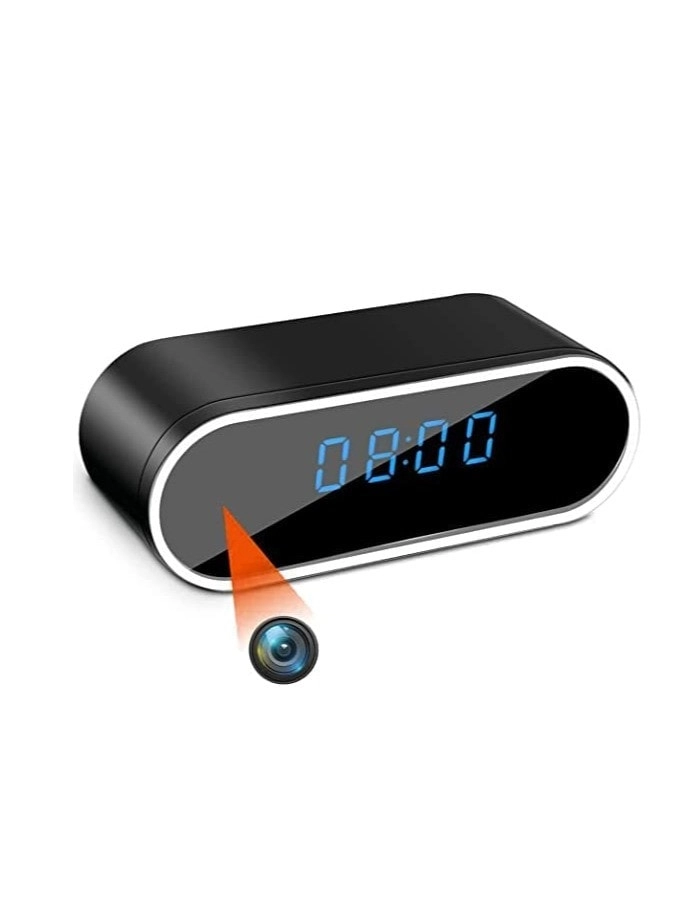
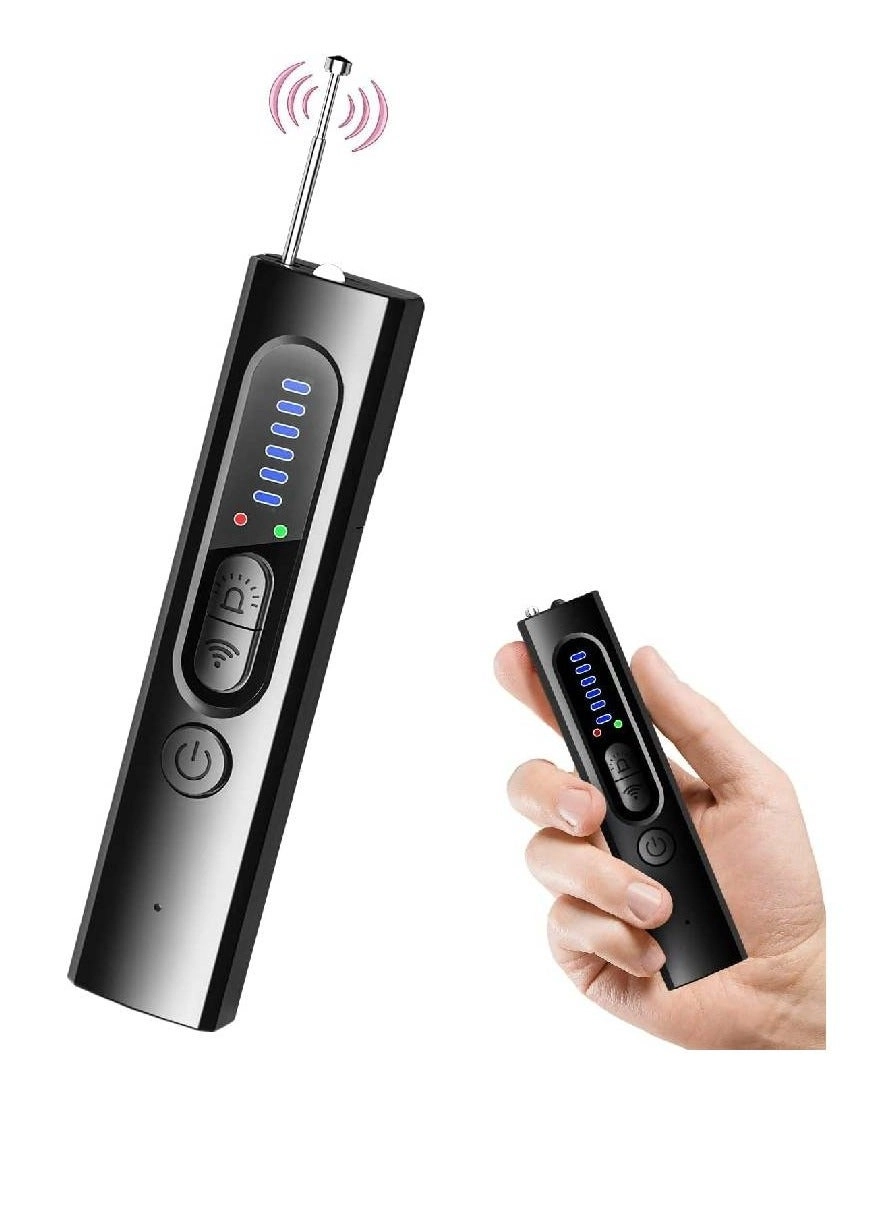
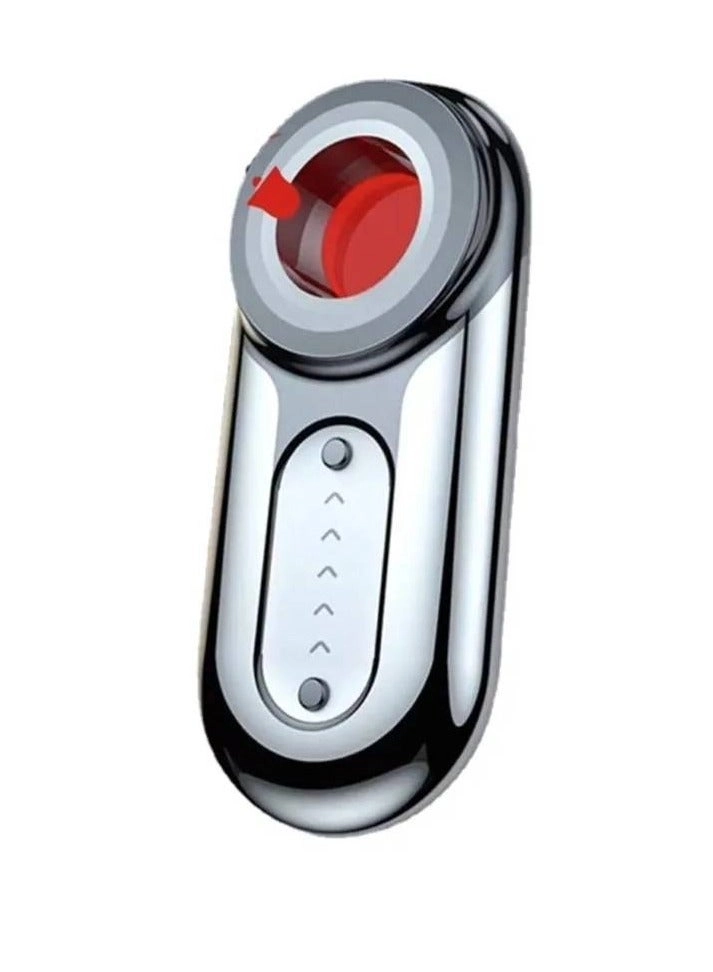
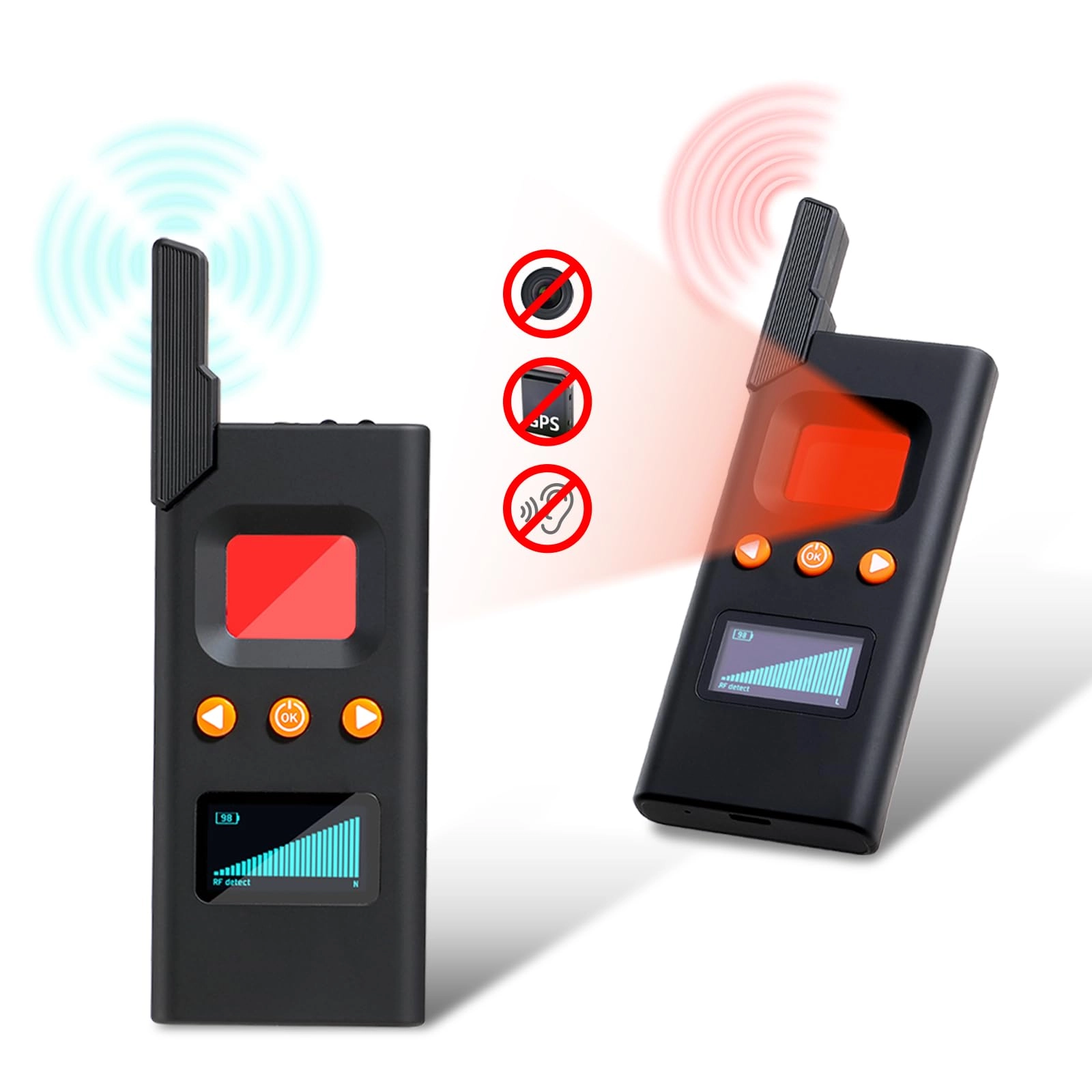
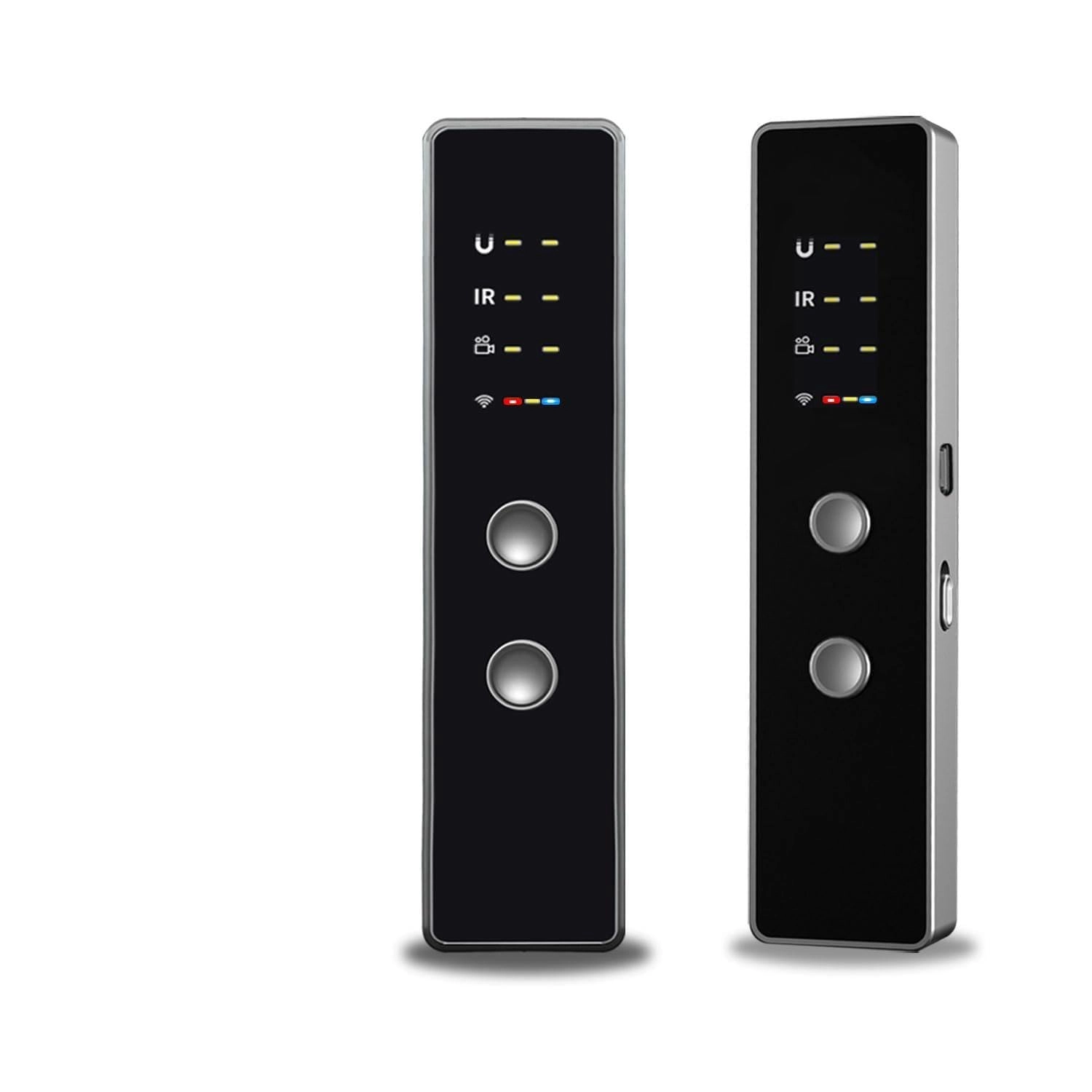
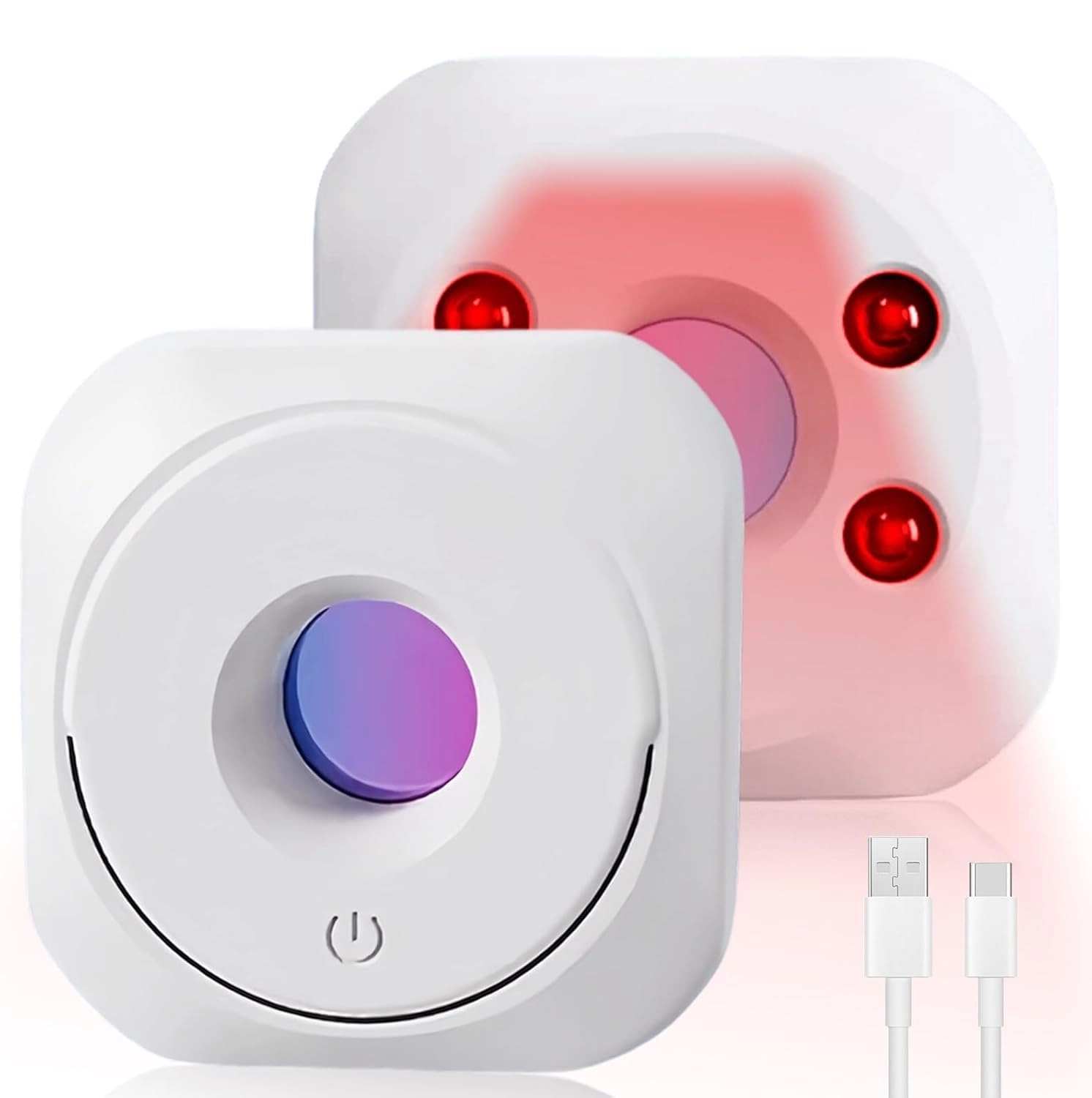
Imagine you are staying in a hotel room and want to check for hidden wireless cameras. You turn on a small handheld device that scans for radio frequency (RF) signals. It has a retractable probe to reach behind the TV or under the desk. An LED light and vibration alert you when a signal is detected. You sweep the room slowly. This device helps you identify potential active transmission sources. That's the purpose of this multi‑function camera detector – a portable RF signal scanner for personal privacy checks.
The detector is made of plastic with a metal probe. It has a digital display or LED indicator, plus a vibration motor. It operates on a rechargeable battery (USB‑C or micro‑USB). The adjustable sensitivity ranges from 1 (least sensitive) to 10 (most sensitive). At higher levels, it may pick up interference from Wi‑Fi routers, phones, or microwaves – these are not threats. The device detects signals in the typical wireless camera frequency range (usually 1.2 GHz to 5.8 GHz), but not all frequencies.
To use, charge the device fully. Turn it on and set the sensitivity to a medium level (e.g., 5). Hold it near your body (or extend the probe) and slowly move around the room. When it alerts (light or vibration), move the device toward the source. The signal strength indicator (bars or audio tone) will increase as you get closer. The probe helps pinpoint the location. This device does not detect cameras that are recording locally without transmitting, nor wired cameras without wireless transmitters.
It can also detect hidden GPS trackers in a car (if they are actively transmitting), audio bugs, and recording pens that use wireless transmission. It is not effective against devices that are turned off or use non‑RF methods. The detection range of 2 meters is optimistic; actual range depends on signal strength and obstacles.