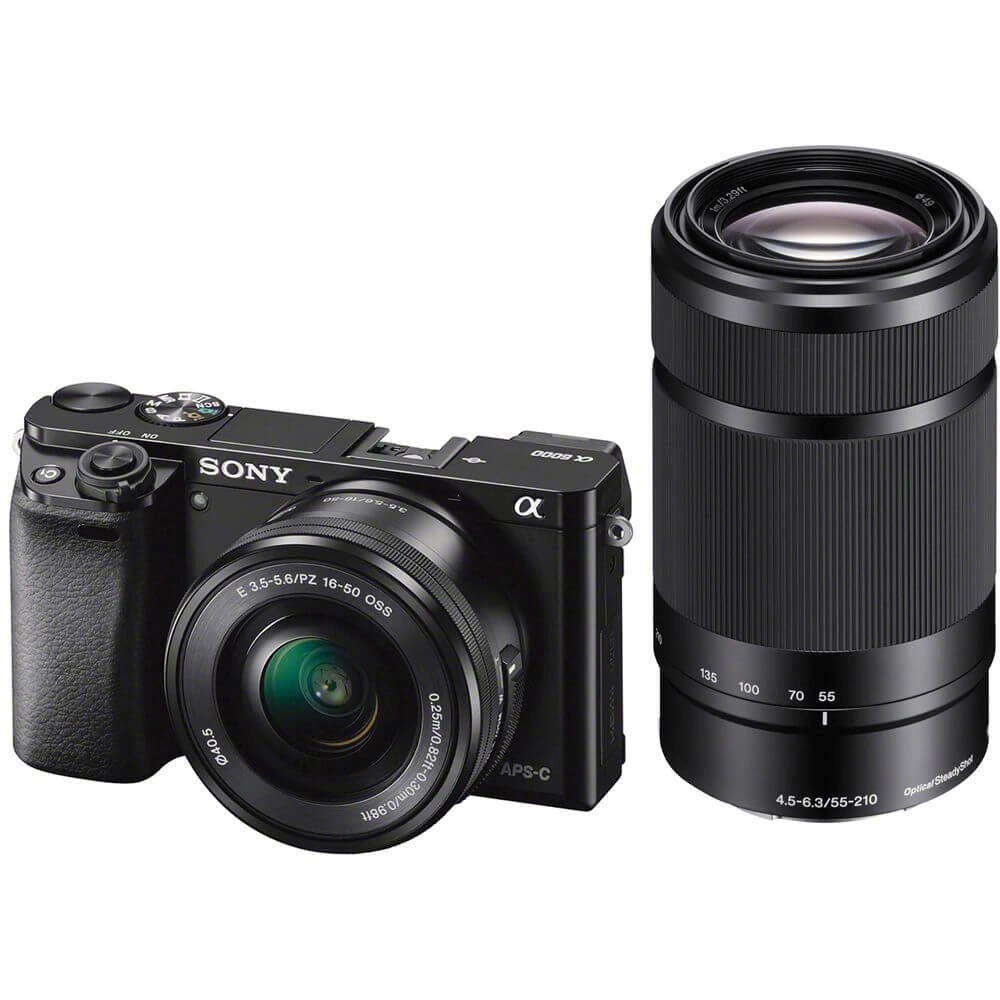
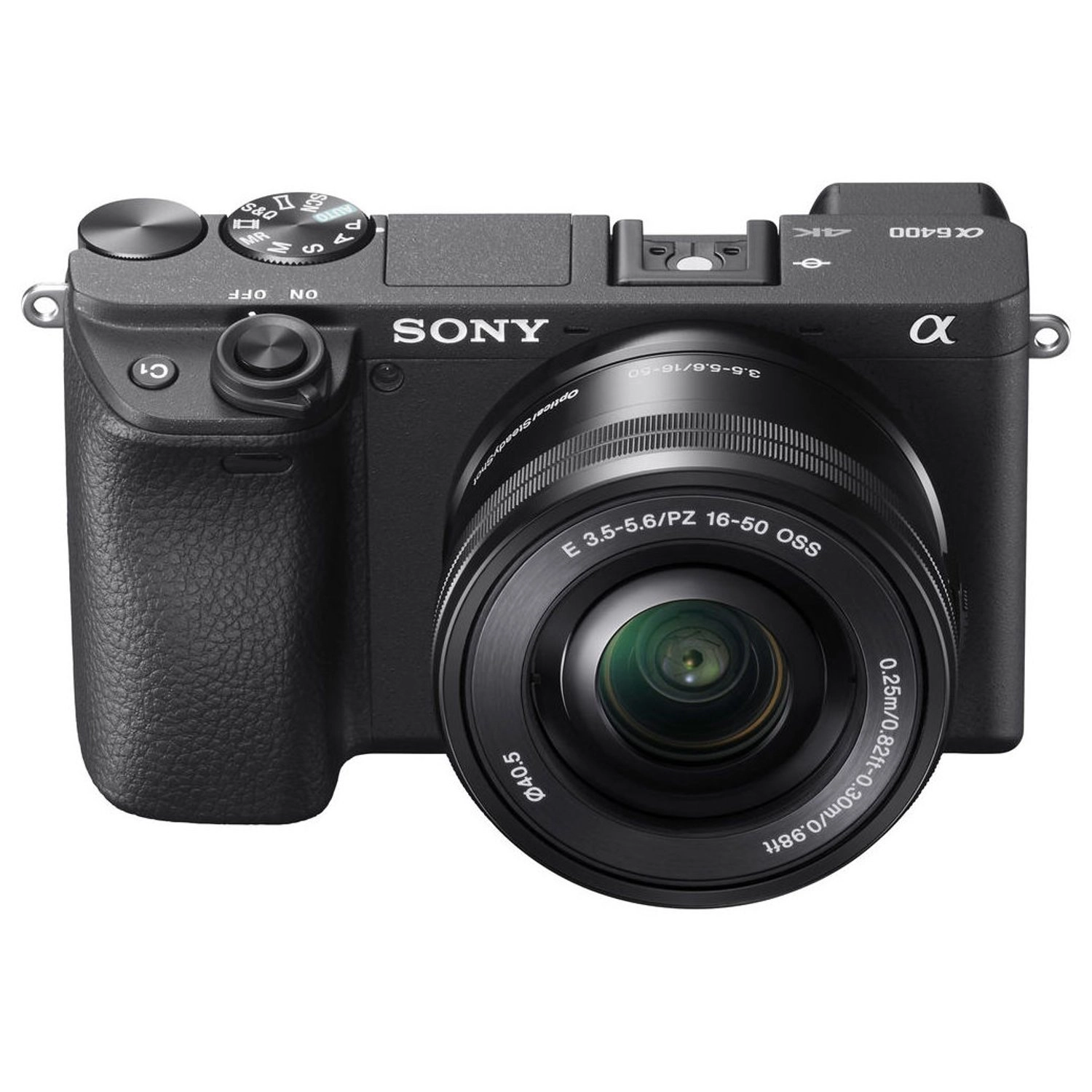
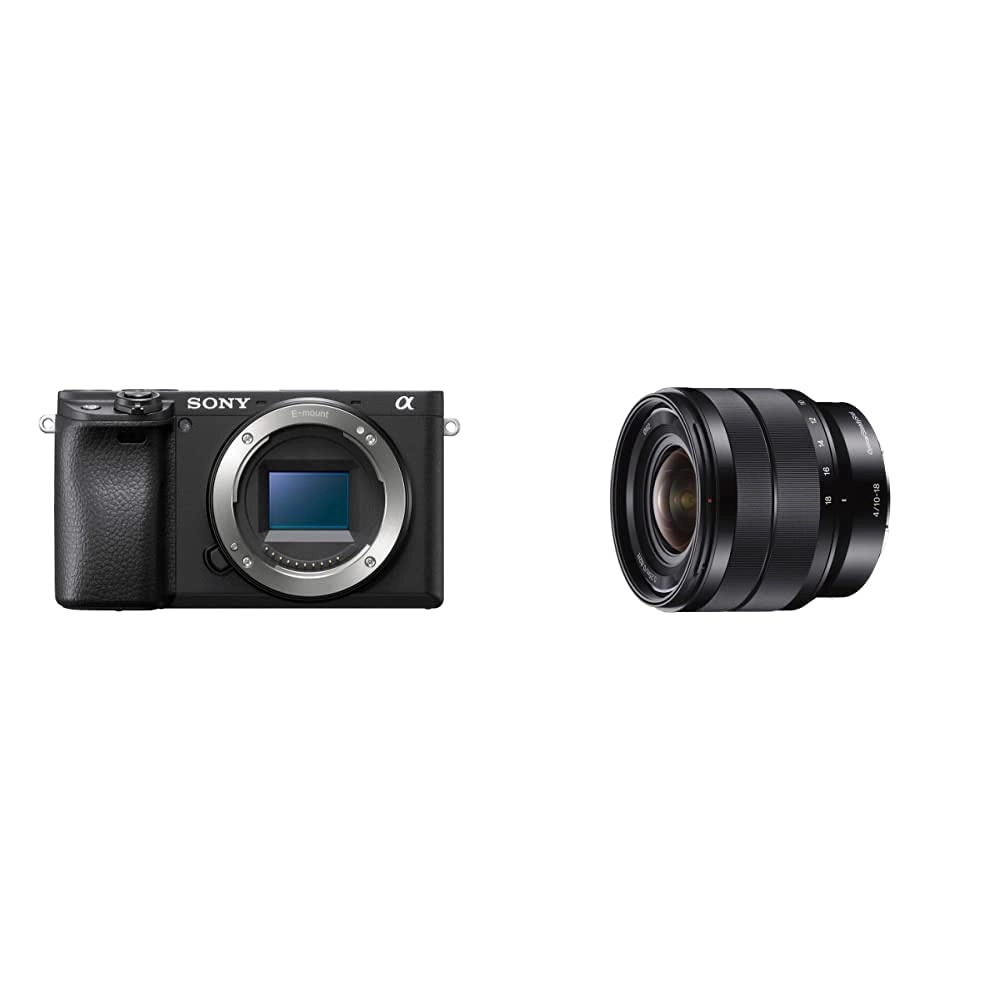
79 point focal plane phase detection AF sensor. The compact,
lightweight camera delivers superb image quality via newly
developed 24.3 effective megapixel (approx.) Exmor APS HD CMOS
sensor and BIONZ X image processing engine as well as highly
intuitive operation thanks to an OLED Tru Finder and two
operation dials.
Review: I said I wouldn't buy one...but I did. - I didn't just
wake up one day and say, "Screw it, I'm buying a new camera!" I
actually spent quite a bit of time online reading and watching
reviews from competent sources, including several who aren't
known as Sony fans. The consensus seemed to be that it is a
competent camera that performs well above its price range.
Following are my impressions of my new travel companion. Look and
Feel/Menus and Customization: While it lacks the brick-like,
all-metal build of the NEX-7, it feels solid and the fit and
finish is excellent. the controls are enough different from the
7's to cause me a little fumbling at first but after a day or
two, I wish the 7's controls could be updated. The custom
function buttons are very useful and the Alpha-style menu is a
huge improvement (NEX-7 firmware update please, Sony!) The lower
resolution viewfinder is listed as a negative on most of the
review sites but I have to strain to see a difference and it
handles dim light a bit better than the 7 with less color static.
The rear LCD is the same as the 7 but here the new menu system is
a vast improvement with a Fn button that allows direct
interaction with the status indicators on the LCD sort of like
the A700 DSLR. Very, very easy to access settings. The pop-up
flash features the same articulated setup as its predecessors
that allows for bouncing within it power limits. My only gripe is
that Sony abandoned theexcellent Minolta hotshoe for the newer
"multi-interface" shoe. I will probably pick up one of the $30
adapters and a new small to medium flash that fits it directly
but honestly, I seldom use flash while travelling and I am
keeping my A77 (or its successor) for events and studio stuff.
Come to think of it, my Alien Bees radio flash commander will fit
the new hotshoe without an adapter! Ok...a small plus for the new
shoe. The only NEX-7 feature I miss is the dual rear dials while
shooting in manual. Not a big deal since I use A-mode most of the
time and I won't miss the inadvertent exposure adjustment caused
by the outer dial when not in manual mode. Since we're back to
controls for a moment, I have to praise the design genius that
located a custom button right next to the shutter button. I have
programmed it to control focus assist magnification and it has
made using manual focus and fine adjustments much easier. 179
Point Hybrid Autofocus: Wow. The NEX-7 is no slouch but was never
noted for its blazing autofocus. The A6000 is noted for its
blazing autofocus and rightly so. I shoot with the NEX cameras a
lot more than the A77 these days and am always shocked when I
pick up the DSLR and focus on something. Pop! it's in focus!
Well, all I can say is that any new mid-range DSLRs had better
have crazy-fast autofocus and huge burst buffers or mirrorless
hybrid-focus cameras are going to start eroding their market
share even more than they are now. Lightning fast with more focus
area options than I care to write about. The three-zone
multi-point focus like on the A77 has become my favorite but I
will be exploring more during the months leading up to our next
trip. It does hunt a bit in really low light but no worse than
most and better than some DSLRs at and above its price range that
I've played with. The autofocusing with the 16-50 PZ is pretty
amazing and if it is any better with a lens like the 70-200 f/4
FE lens, it may lead to a lot of soul-searching before I spend
any money on a new DSLR. Burst Shooting: Burst shooting? You
betcha! I am used to really fast burst shooting from the A77 and
wasn't disappointed. The A6000 is only 1 fps slower than the
A77's 12 fps speed-priority mode and will maintain autofocus and
metering for each frame. The A77 has to "slow down" to 8 fps to
match that. The buffer is a lot larger than the NEX-7 and even
larger than the A77. Unlike the A77, it needs 15-20 seconds to
clear after a long burst (up to 49 JPEG/22 RAW) which may be an
issue if you shoot a lot of action. If you only shoot heavy
action occasionally or limit yourself to short bursts to catch
the peak moment, the burst speed and its ability to track focus
performs far above entry-level DSLRs and most-mid-range models.
Image Quality: The NEX-7 was a incremental step up from the A77
in my opinion, probably due to not having the mirror stealing
some of the light. The A6000 is at least one full stop better in
low light and in my opinion, shoots acceptable (your mileage may
vary) images up to ISO 12,800. At low ISO in good light, all
three produce spectacular detail with excellent color. the
A6000's AWB with CFL or incandescent lighting is hit and miss but
that is true for almost any camera these days with 1000 different
temperatures available in residential lighting. Fortunately,
setting a custom white balance is ridiculously easy and the
results are spot-on. Bottom line? If you are coming from a NEX-7,
you will be pleasantly surprised. if you are coming from a
"Sweet-Sixteen" camera by Sony, Nikon, Pentax or any other that
uses the Sony 16.1MP APS-C sensor, you're in for a bigger
surprise. The detail captured with a good lens and normal care in
how you shoot is pretty amazing. Why I Now Need WiFi on a Camera:
'Cause this one has APPS! (See below.) Other than that, it is of
marginal use at this time since I use a Windows phone. While I
prefer the performance, desktop integration, awesome camera and
intuitive interface, it's a bit of a pain to be last on the dev
list for things like camera controls and smart home stuff. I will
likely dig out my old RAZR Maxx and set it up as a camera remote
control just to say I did. In practical use, I seldom (if ever)
need a remote in a way the wireless Sony RMTDSLR2 can't provide.
Why I Now Need Apps on a Camera: You know that convenient,
inexpensive wireless intervalometer you use on your older NEX
camera for time-lapse and astrophotography? Yeah...that one. The
one that doesn't exist. Well, now there's an app for that. There
are several apps available with many of them being free. Some of
the paid apps have the same functions as those already on the
A6000 and seem to be available as upgrades for the web-enabled
models that don't have the option built-in. The Time Lapse app is
really pretty cool. In addition to all of the interval settings,
it can be set to create a movie automatically at the end of the
sequence. There are also Motion Shot and Star Trail apps that
look like they have some potential. The Time Lapse intervalometer
app was only $10 (cheaper than the wired Chinese knock-off
controllers) and has me smiling for now. The Return of Tethering:
Absent from Sony/Minolta cameras I've owned since my
Konica-Minolta A2, tethering has returned! It's pretty limited
but I'm hopeful that it will evolve. Hey, it's a step forward!
The New 16-50 Power Zoom: My original SELP1650 that came with my
NEX3 was a good walkabout lens with reasonably good image quality
and was amazingly compact (for what it is) when powered down and
retracted. I bought the A6000 with another 16-50 and a kit
because of the sad little reminder sitting on the desk in front
of me as I write this. During a recent trip to Disneyland, I
snapped a picture in the courtyard between the two parks upon
arrival then proceeded immediately into the park. Immediately.
Quicker than the time-out setting on my camera. The time-out that
would have retracted the lens and kept it from wedging between my
hip bone and the turnstile as I went through. BlackRapid is still
my favorite strap but I learned a valuable lesson involving strap
length, clearance and the fragility of kit lenses. So how much
better does the younger sibling of the permanently extended,
slightly angled corpse sitting on my desk perform? Can't tell. My
old copy was pretty good and this one seems to be at least as
good. Focusing speed seem about the same so I would guess that
any improvements were minor refinements. Not as sharp as the
Sigma primes but as a travel lens with jacket pocket portability,
it is hard to beat. The Only Camera I'll Ever need?: No. That
camera doesn't exist yet. I will not be selling my A77 or NEX7
anytime soon. The 7 is still a workhorse and while it lacks some
of the next-generation improvements, it is still the great camera
that lured me into buying it a couple of years ago. It will also
be a better second body than my trusty little NEX3N. The A77 is
still superior in handling long lenses and its battery life with
the battery grip is good for any day of shooting. I may replace
it if Sony comes out with an A-mount version of the A7 family
with Canikon-killer features but for now it still has a home.
That wraps it up for now. Having come from an A77 and a NEX-7, I
am not "blown away" by the A6000 but I am very pleased with its
performance and not at all regretful of the (reasonable) expense
for what now appears to be a decent upgrade of several vital
performance points.
Review: Best there is in a compact SLR - I recently set out to
find a good camera capable of DSLR quality images but in a
compact, lightweight, and easy to carry around design. After
carefully reviewing this camera as well as several others in its
class, I settled on the a6000. I am pleased to say I love this
camera. The quality of images is outstanding with the large
sensor and high mega pixel count. The camera packs a lot of
features to it. I love how fast the focus is and the amazing fps.
My only major criticism of the camera: The lack of being able to
use the auto bracket and timer mode simultaneously. This is a
serious flaw that Sony needs to address and hopefully will with a
firmware upgrade. It is possible to get the results you need but
in a harder work-around. So if you do a lot of HDR photography
for example, this is something you will want to consider. I have
a few non-serious nitpicks: -Some have criticized the battery
life of the camera. While it could definitely be better, for the
type of shooting I do (mostly travel photography and occasional
high speed continuous shooting for action shots), I have been
able to deal with it. But I also ordered two non-Sony brand
batteries to use as back up which helps a lot. I recommend
obtaining extra batteries to have on hand. The camera does
feature a battery life meter on the display (indicated in %) to
help you know when the battery is getting low. - The camera
doesn't come with a body cap. While these are inexpensive and
easy to obtain, it is nice to have a cap on hand, especially
being a mirrorless camera where the sensor has nothing in front
of it when a lens or cap is not attached. - A wall battery
charger would have been nice. Instead, you must charge the
battery via the camera and plug that in to the wall. Lame. Do
yourself a favor and order separately, a wall charger and extra
batteries for this camera. There are some non-Sony brand
chargers/batteries on desertcart you can get inexpensively. I
ordered two non-Sony brand extra batteries and a wall charger
bundled for about $25 and they work well and the charger also
charges the real Sony battery. - Hopefully there will be more
choices of Sony E mount lenses in the future. The ones I have
used so far are good though. If rating this camera a 4.5 were an
option, I would choose it. Only because of the issue of not being
able to use the bracketing and using the timer simultaneously.
But it wasn't enough to dock it a full point as it is something I
am hopeful Sony can fix with firmware changes and is something I
can live with if they don't. All in all, this camera has exceeded
my expectations and is a joy to shoot with. You will especially
love this camera if you don't want to carry a big heavy SLR
around but still want excellent quality pictures. For my needs,
this the best camera I have ever owned and I imagine it will last
for a long time!