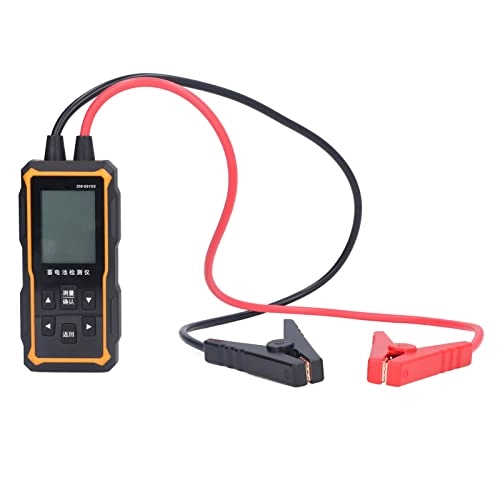
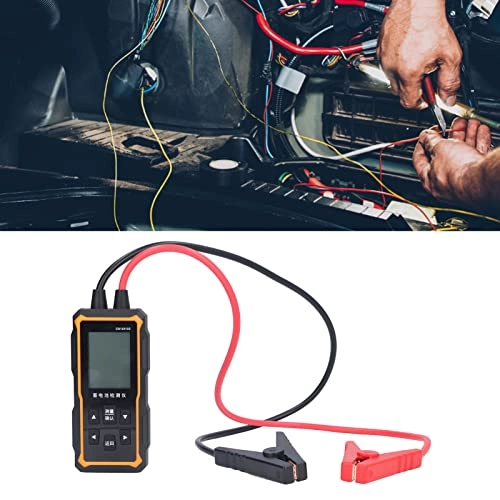
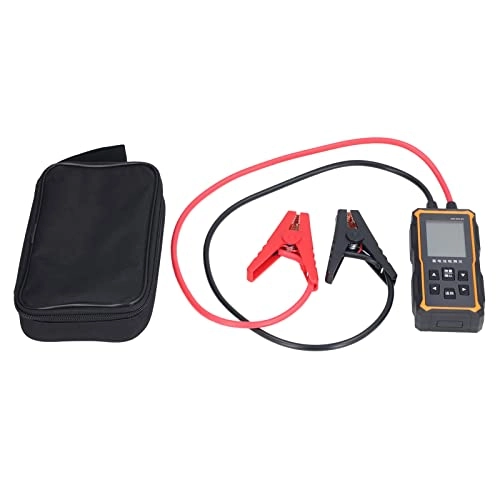
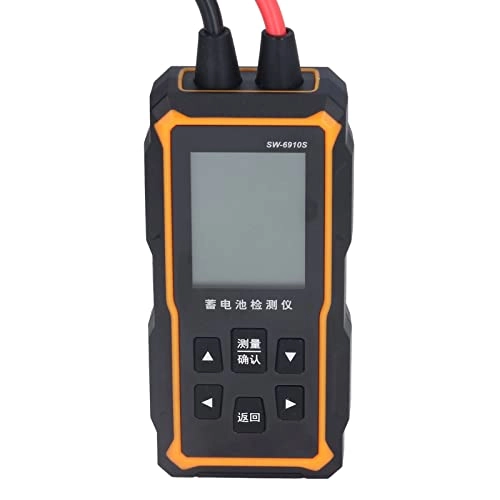
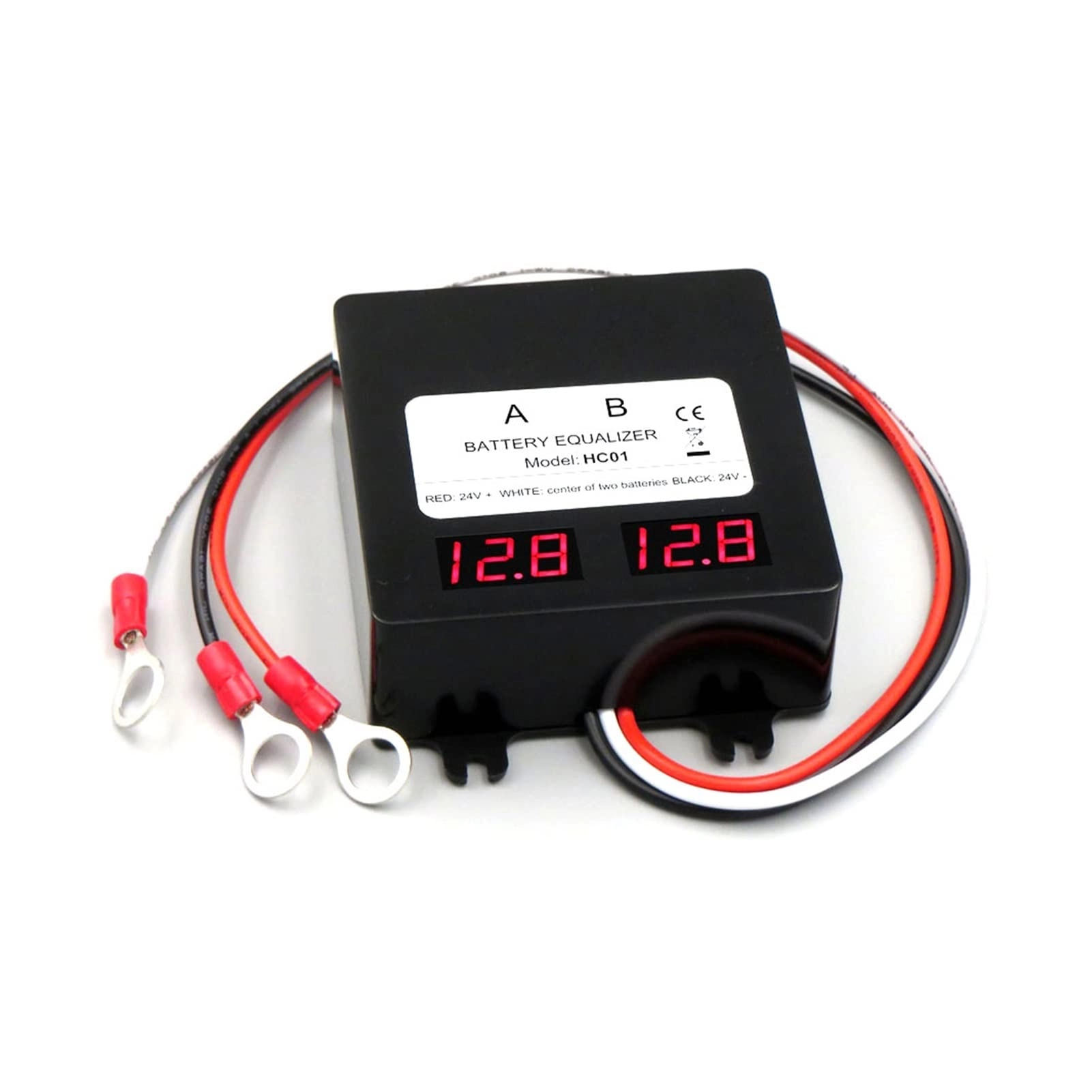
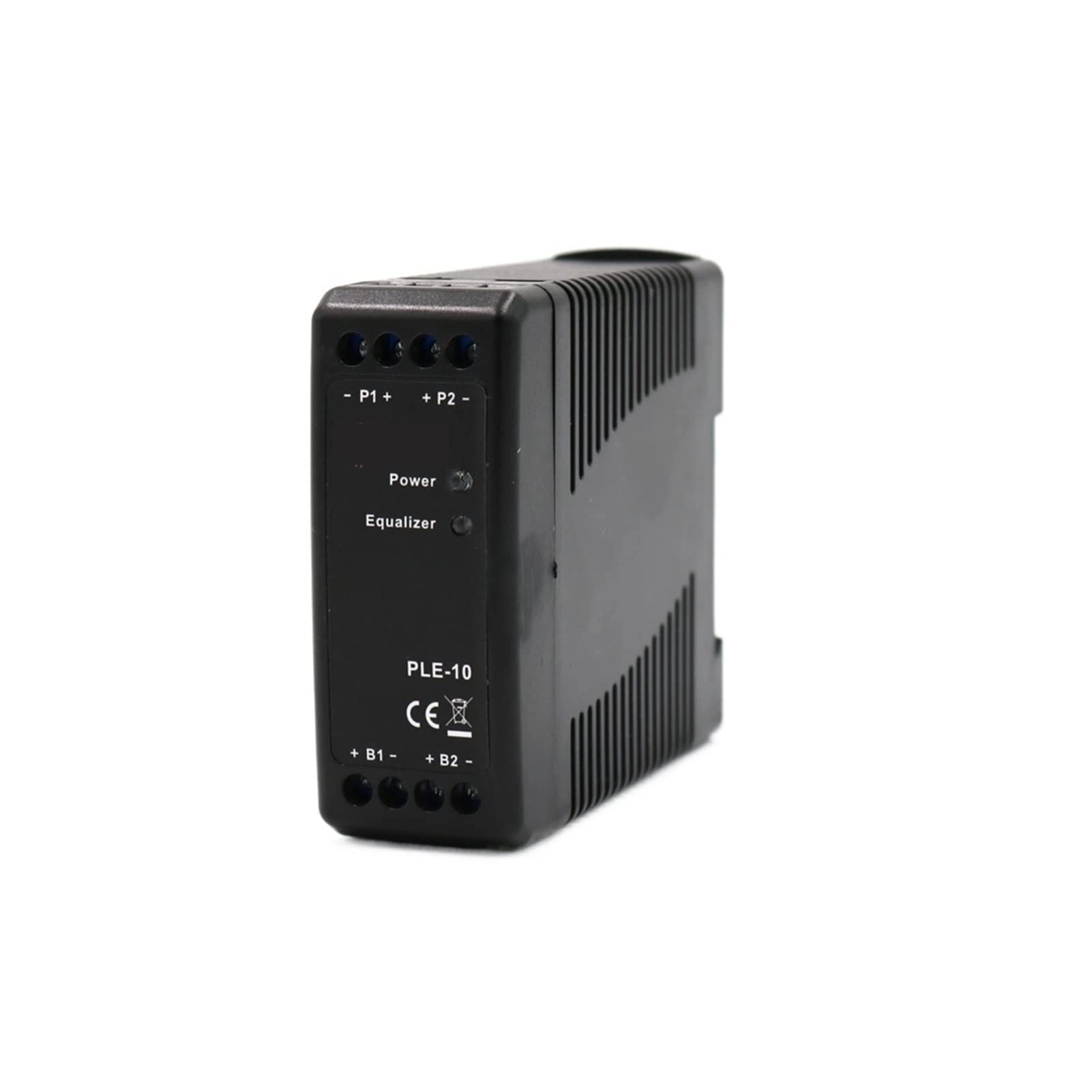
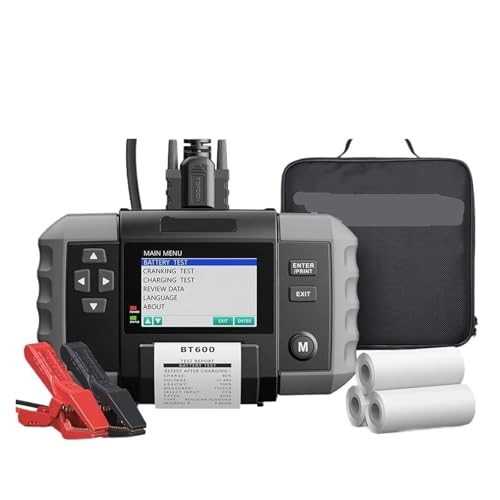
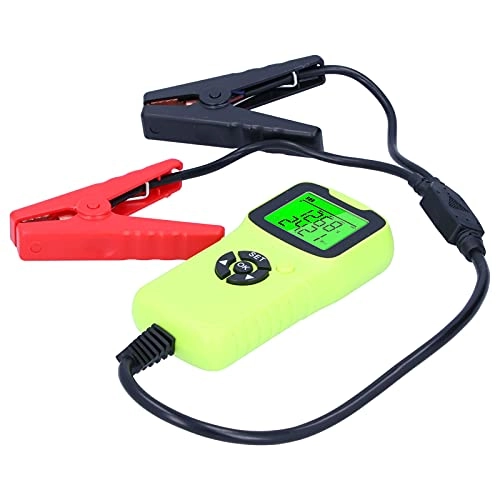
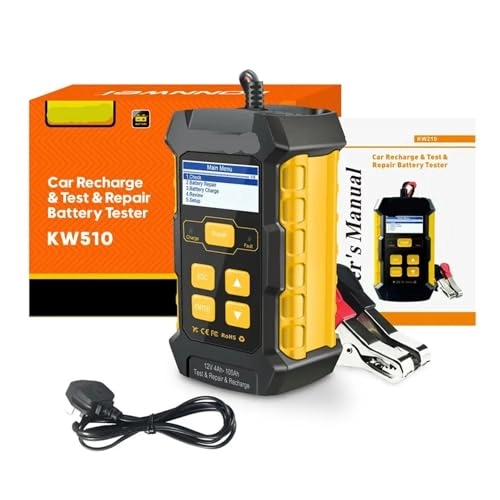
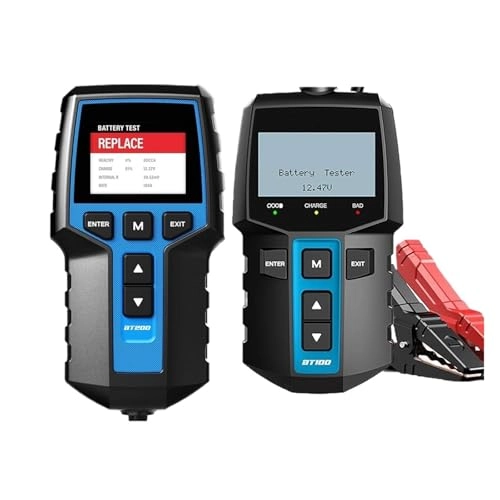
1. [POWERFUL BATTERY TESTING TOOL] - Analyze and test 12V and 24V lead acid batteries during vehicle startup, charging, and static states.
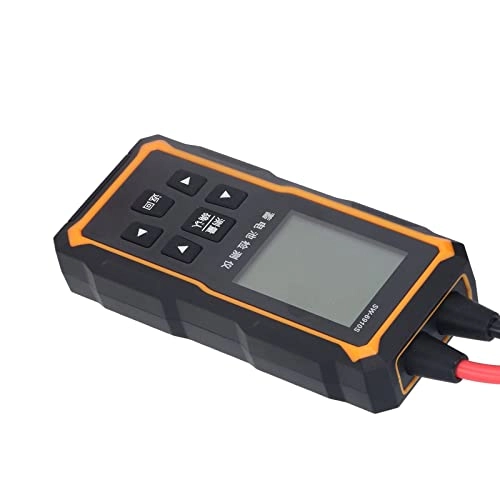
2. [ACCURATE LARGE SCREEN DISPLAY] - Easy to operate with a large LCD screen for precise readings and complete functionality.
3. [ENHANCED INPUT PROTECTION] - Prevents reverse polarity, high voltage connections, and poor test chuck contact for and more accurate use.
4. [HIGH-PERFORMANCE DESIGN] - Utilizes accurate circuits and digital processing units for complex data collection and analysis.
5. [VERSATILE USAGE] - Ideal for battery production, auto maintenance, and lead acid battery equipment analysis.
Specification:
Item Type: Battery Tester
Product Material: ABS
Battery Voltage Settings:
12V: 12V Battery, Generally Used In Gasoline Vehicles
24V: 24V Battery, Generally Used By Vehicles
Electric Vehicle: Generally Used For Testing Electric Vehicles, Single Test Separately (Multiple Battery Pack Tests Are Prohibited)
Standard Options:
Unknown: When The Battery Standard And Capacity Cannot Be Determined, This Item Can Be Selected (Note: This Item Can Only Measure The Current Power, Not The Life.)
CCA Standard: Cold Cranking Current
IEC Standard: International Electronic Technology Association
EN Standard: European Industrial Standard
DIN: German Industrial Standard
JIS: Japanese Industrial Standard
VRLA GEL AGM SLA: Lead Acid Batteries For Vehicles
STANDARD LSI: Start Stop Battery For Vehicles
Weight: Approx.413g / 14.6oz
1. The inverter is installed on the car, will it affect the results?
All inverters will affect the test results of the meter, so please remove the inverter before measuring to ensure the correctness of the test.
2. Can this product accurately predict when the battery will fail?
The internal of sealed lead acid batteries is complex, which includes the ohmic internal of the battery, the internal of the concentration difference polarization, the internal of the electrochemical , and the interference effect of the double layer capacitor charging. The components and their relative contents contained in the internal values measured by different test methods and at different times are different, so the measured internal values are also different. There is no strict mathematical relationship between the internal (or conductance) and battery capacity of sealed lead acid batteries, and the battery life cannot be predicted based on the internal (or conductance) value of a single battery. However, when the internal of the battery suddenly increases or the "CCA" suddenly decreases, it indicates that the battery life is about to end.
3. Is the CCA value measured by this product accurate?
CCA is a control standard in battery production. According to the accumulated results, the measured value of the new battery will be higher than the marked value (10 to 15%), and will gradually approach the marked value as the battery is used, and then lower than the marked value.
4. The difference between this product testing method and the load testing method
Load test method: according to the physical R=V/I. The test equipment forces the battery to pass a large constant DC current in a short time (usually 2 to 3 seconds) (currently a large current of 40A to 80A is generally used), measure the voltage across the battery at this time, and calculate it according to the The current internal of the battery.
This method has evident shortcomings:
(1) Only large capacity batteries or accumulators can be measured, and small capacity batteries cannot load a large current of 40A to 80A within 2 to 3 seconds.
(2) When the battery passes a large current, the electrode inside the battery will be polarized, resulting in polarization internal . Therefore, the measurement time must be very short, otherwise the measured internal value has a large error.
(3) The large current passing through the battery will damage the electrodes inside the battery to a certain extent.
Measurement of this product:
Because the battery is actually equivalent to an active resistor, we apply a test signal with a fixed frequency and a fixed current (small current) to the battery, then sample its voltage, and after a series of processing such as rectification and filtering, the operation The circuit calculates the internal of the battery.
Advantages of this method:
(1) Almost all batteries, including small capacity batteries, can be measured using this measurement method.
(2) Measurement by this method will not cause much damage to the battery itself.
How to